.avif)
If you are searching for a pretrial diversion program in Georgia, US, chances are you or someone you care about is facing a pivotal moment.
An arrest, even for a minor offense, can feel like a life-altering event, threatening your reputation, career, and future.
Rather than excusing your mistake, you want to learn from it and avoid a lifelong criminal record.
This guide explains what a pretrial diversion program is and who qualifies for it. You’ll also learn how to complete the program successfully so that one mistake doesn’t define your future.
Key Takeaways
- Avoid Conviction: A pretrial diversion program is a path to get your charges dismissed, not a conviction.
- Check Your Eligibility: These programs are typically for first-time, non-violent offenders. Rules vary by county.
- Active Role Required: You must complete all conditions, which often include fees, community service, and classes.
- Clear Your Record: Successful completion often allows you to restrict your arrest record from public view.
- Online Classes Offer a Solution: Modern, court-accepted online programs provide a flexible way to complete required courses.
What is a Pretrial Diversion Program in Georgia?
A pretrial diversion program is a voluntary agreement between you and the prosecutor. The prosecutor’s office agrees to pause your case instead of taking it to trial. In return, you agree to follow a set of specific conditions for a set period, usually a few months to a year.
The program’s goal is rehabilitation, not punishment. The state created this option for people who made a mistake but are not likely to re-offend.
A criminal conviction can create lifelong barriers. Diversion programs target root causes like poor decision-making or substance use. This focus helps reduce the chances of future legal issues.
State law supports these programs. Georgia Code O.C.G.A. § 15-18-80 gives prosecutors the authority to create and run pretrial diversion programs in state, municipal, and other courts.
Are You Eligible for Pretrial Diversion?
Eligibility is key. The prosecutor in your specific jurisdiction makes the final decision. However, they usually follow a common set of criteria in Georgia. They look at the crime, your record, and your willingness to participate.
You may be eligible if:
- This is your first offense.
- You are charged with a non-violent misdemeanor like shoplifting, simple battery, or possessing a small amount of marijuana.
- You accept responsibility for your actions.
- You agree to the program's terms in a formal contract.
You are likely not eligible if:
- You are charged with a serious violent crime.
- You have a felony on your record.
- You have already been in a diversion or First Offender Act program.
- The charge is for a DUI, which is usually excluded.
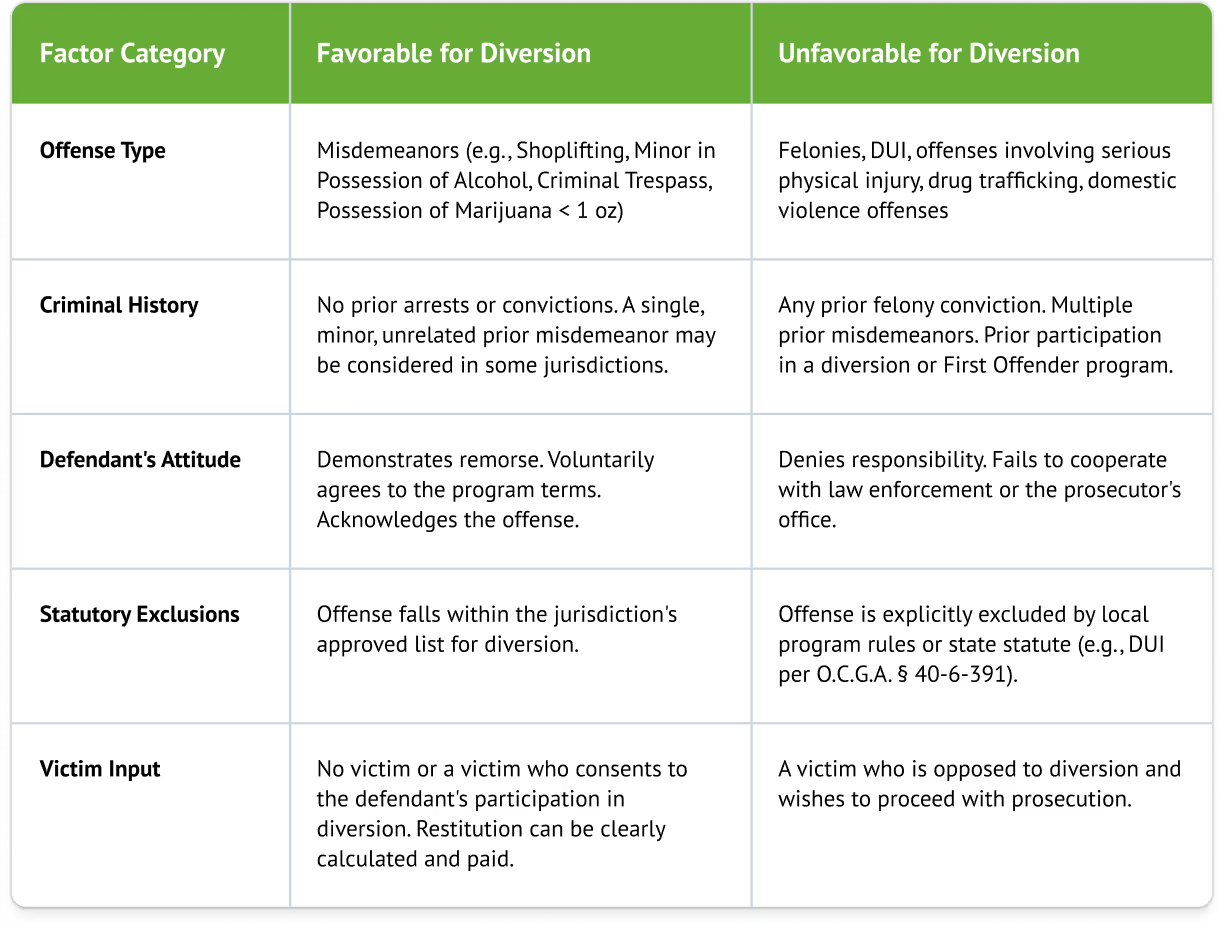
A Comprehensive Breakdown: Program Suitability Matrix
This table shows what prosecutors consider when reviewing applicants.
Your Responsibilities in a Georgia Diversion Program
If accepted, you will sign a contract that details your specific duties. You must complete every task to succeed. Common requirements include:
- Supervision: You will report to a probation officer or program manager.
- Fees and Restitution: You must pay program fees and reimburse any victims for their financial losses.
- Community Service: You must complete a specified number of community service hours.
- Counseling and Classes: You may need to take courses related to your offense, like anger management, substance abuse education, or theft prevention classes.
- Drug and Alcohol Tests: You must pass random drug and alcohol screenings.
- Stay Out of Trouble: You cannot be arrested for any new crime during the program.
A Modern Way to Fulfill Your Obligations
In-person classes may be difficult due to work, family, or other commitments. Work, family, and other duties create scheduling challenges. Online rehabilitation programs solve this problem. Courts throughout Georgia now accept certificates from credible online courses.
These online programs offer the same quality curriculum as in-person classes but with total flexibility. You can finish your work from home, on your own time.
This helps you meet court deadlines without turning your life upside down. This convenience removes obstacles so you can focus on learning.
Two Outcomes: Success or Failure
The outcome of pretrial diversion in Georgia is clear.
- Success: If you complete every requirement in your contract, the prosecutor will dismiss your charges. This is called a nolle prosequi. You can then state that you were not convicted of the crime. Afterward, you can work to get the arrest record restricted, clearing it from public access.
- Failure: If you do not meet even one condition, you will be removed from the program. Your case goes back to the court's trial calendar. The prosecution resumes as if the program never happened. You will face the original charge and a possible conviction.
Take Control of Your Future with CT3 Training
Facing a criminal charge is stressful, but a pretrial diversion program offers a way to protect your future. Completing your required educational courses is a key step, and you need a reliable program that works for you.
CT3 Training provides that solution.
We offer 100% online, self-paced courses that are accepted by courts across Georgia. Our programs, focused on bias-motivated offenses, are designed by certified experts and are available 24/7 on any device.
Don’t let scheduling conflicts stop your second chance. Choose the modern, trusted, and convenient option.
Visit https://www.ct3training.com/ now to enroll. Take the most important step toward getting your charges dismissed and reclaiming your future.
FAQs
Q1: What is a pretrial diversion program in Georgia?
Under O.C.G.A. § 15-18-80, pretrial diversion is a voluntary agreement between the defendant and the prosecuting attorney. Rather than taking the case to trial, the prosecutor agrees to pause proceedings while the defendant completes a set of conditions, typically over a few months to a year. Finish everything required and the prosecutor files a nolle prosequi, a formal decision to drop the charges. The case is dismissed. No conviction, no guilty plea on the record. The program is designed for people who made a one-time mistake and are unlikely to end up back in court.
Q2: Who qualifies for pretrial diversion in Georgia?
The district attorney's office in each county makes the call, and criteria vary somewhat across jurisdictions. Generally, you're looking at first-time offenders charged with non-violent misdemeanors. Shoplifting, simple battery, and minor marijuana possession are common examples. The defendant has to accept responsibility and sign a written agreement to the program's terms. Prior felony convictions, prior diversion or First Offender Act participation, and charges involving DUI or serious violence are all typically disqualifying.
Q3: Does pretrial diversion show up on a background check in Georgia?
During the program, the arrest is a public record and will appear on background checks. It hasn't been resolved yet, so there's nothing to restrict. After successful completion, you can seek record restriction under O.C.G.A. § 35-3-37, which seals the arrest from public view. Most employer and landlord checks won't surface it after that. Federal, law enforcement, and security clearance searches are a different matter. Those can still access restricted records. Get the restriction done as soon as you're eligible.
Q4: Can you participate in pretrial diversion more than once in Georgia?
No. The program is built around first-time offenders, and that eligibility is essentially one-time. Prior participation in diversion, a prior First Offender Act sentence, or a prior conviction typically ends the conversation before it starts. The prosecutor has some discretion, but approval for someone with prior diversion history is rare.
Q5: What are the requirements of pretrial diversion in Georgia?
Everything is laid out in a written contract you sign at the beginning. Common requirements across Georgia counties include administrative program fees, restitution to any victims, community service hours, counseling or educational classes tied to the offense such as theft prevention, anger management, or substance abuse education, random drug and alcohol tests, regular reporting to a program supervisor, and staying arrest-free for the entire duration. Miss any one of these and you're out of the program. There's no partial credit.
Q6: Is DUI eligible for pretrial diversion in Georgia?
Generally, no. DUI charges fall outside the scope of standard pretrial diversion across most of Georgia. There's no uniform statewide first-offender DUI diversion program the way some other states have structured one, and individual county prosecutors rarely make exceptions. Anyone facing a DUI charge needs a direct conversation with a Georgia defense attorney about what options actually exist for their specific situation and county.
Q7: What happens if you fail pretrial diversion in Georgia?
Your case goes back on the court's trial calendar and prosecution resumes as if the program never happened. There's no partial credit for what you completed, no second chance at re-entering the program. You face the original charge from the beginning, with a potential conviction and all its long-term consequences. One missed condition is all it takes.
Q8: What is the difference between pretrial diversion and Georgia's First Offender Act?
Both can result in no conviction on your record, but they work very differently. Pretrial diversion happens before any court proceeding. The prosecutor controls it, no guilty plea is entered, and the case never reaches sentencing. The First Offender Act (O.C.G.A. § 42-8-60) kicks in at sentencing, after you've already entered a guilty plea. The judge controls it, and you're sentenced under first-offender status. Pretrial diversion is generally the stronger outcome because it requires no guilty plea, the admission that immigration authorities and some licensing boards focus on. If diversion is available in your case, it's usually worth pursuing over First Offender treatment.
.svg)


